What is DOB Letter of No Objection / Verification
In New York City real estate, “legal use” is not a casual detail. It affects sales, leases, financing, and sometimes whether a tenant can even get the permits they need to operate. Most of the time, the legal use is confirmed by the building’s Certificate of Occupancy (C of O)—the document issued by the NYC Department of Buildings (DOB) that summarizes permitted use and occupancy.
But NYC has plenty of older buildings where the story is not that simple.
Some buildings were built before Certificates of Occupancy were commonly issued, or the paperwork is incomplete, or the C of O exists but the language is vague and does not clearly describe the current use. In those situations, owners, buyers, brokers, and attorneys often need DOB documentation that clarifies what the City recognizes as the building’s legal use.
That’s where two DOB documents show up all the time:
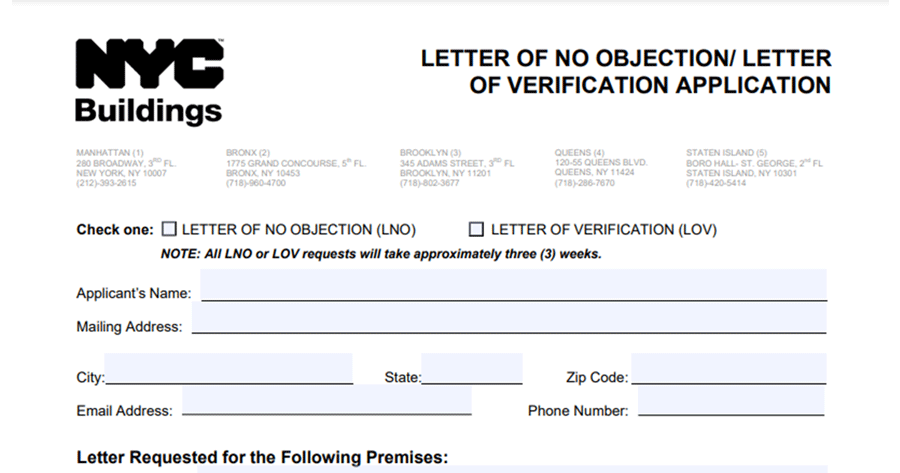
LNO (Letter of No Objection)
LOV (Letter of Verification)
This post explains what each one is, when you need it, and what owners should prepare before starting the process.
Why Some NYC Buildings Don’t Have a Certificate of Occupancy
Not every NYC building has a C of O. This is most common with older buildings, especially pre-war properties, where the paper trail can be complicated. Even when a C of O exists, it may be outdated, limited, or written in a way that raises questions during a transaction.
Typical examples I see in practice:
a mixed-use building where the C of O is unclear about the ground-floor use
a building with a long-standing store on a residential block
a multi-family building where the unit count history is inconsistent across records
a building with an office, studio, or “accessory” use that is hard to classify
a lender or buyer attorney asking for “DOB confirmation” beyond the C of O
When that happens, the goal is simple: get a document that supports the building’s legal use in a way that is acceptable for the transaction or the filing you are trying to do.
Zoning Makes It Harder (Especially Overlays and Older Uses)
NYC zoning is not just “residential” or “commercial.” A building can sit in a residential district with a commercial overlay, or in an area where uses have existed for decades under prior rules.
Two situations come up constantly:
1) Mixed-use buildings in overlay districts
You may have residential apartments above and a commercial use at the ground floor. During a sale or lease, the parties often want clear documentation showing the legal status of both components.
2) “Grandfathered” or legal non-conforming uses
You can walk down a residential block and still see stores. Sometimes that use is legal because it existed before zoning restrictions tightened, and it has the right to remain (as long as it isn’t discontinued or changed in a way that loses the protection).
The moment an owner wants to do a major change—enlarge the building, change the C of O, or alter use—the zoning analysis becomes more sensitive, and documentation becomes more important.
HPD I-Card (for Multi-Family Buildings): Helpful, but Not Always Clean
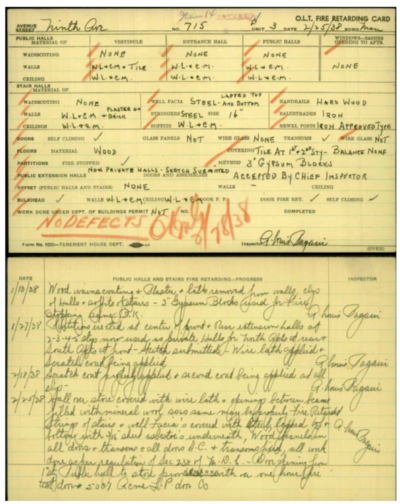
Before getting into LNO and LOV, there’s one NYC record that often comes up first: the HPD I-Card.
For many multi-family buildings, HPD maintains historical records showing:
number of dwelling units
unit layouts (sometimes)
notes on occupancy, stores, or offices (when recorded)
An I-Card can be useful background evidence, especially for older buildings that do not have a C of O.
But here’s the problem: I-Cards can be inconsistent. You might see different unit counts across different inspection years. You might see a reference to an office in one inspection and no mention of it later. That doesn’t automatically mean the use was removed—it could mean the later inspection was limited or the documentation simply wasn’t captured the same way.
Also, I-Cards apply to multi-family buildings. They usually won’t help for:
one- and two-family homes
purely commercial buildings
So think of the HPD I-Card as a supporting document, not the final answer.
What Is a DOB LNO (Letter of No Objection)?
A Letter of No Objection (LNO) is a document issued by the NYC Department of Buildings that, in practical terms, confirms the DOB has no objection to a stated use based on the records reviewed.
When an LNO is commonly used
The building does not have a Certificate of Occupancy, and you need DOB documentation to support legal use
A transaction (sale/lease/refinance) requires clearer proof of legal use
You need a DOB-backed letter to support agencies, lenders, or attorneys
An LNO does not “create” a new right. It’s a DOB statement based on the records and facts presented. That’s why the quality of the submission package matters.
What Is a DOB LOV (Letter of Verification)?
A Letter of Verification (LOV) is typically used when a building already has a Certificate of Occupancy, but the C of O does not clearly answer the question being asked.
When an LOV makes sense
The C of O exists, but the use description is vague or outdated
A lender, buyer, or attorney asks for DOB confirmation of what the C of O means in practice
You need DOB clarification about the legal use classification or occupancy/use group language
In short:
LNO is usually for buildings without a C of O
LOV is usually for buildings with a C of O, when clarification is needed
What the DOB Typically Looks For
This is the part people underestimate. These letters are not “one and done.” The DOB will rely on documentation, and weak documentation usually creates delays or denials.
A strong submission often includes:
DOB records (old approvals, permits, sign-offs, job filings)
historical documents when relevant
photos and a clear written explanation of existing conditions
HPD I-Card (if applicable)
zoning context (especially for mixed-use and non-conforming use questions)
any prior determinations or agency records that support continuity of use
The overall goal is to make the DOB reviewer’s job easier: a clean story, supported by records.
I wrote this because I get the same question repeatedly from owners, brokers, attorneys, and buyers:
“Do we have proof that this use is legal?”
In NYC, the right document depends on the building’s history:
If there’s no Certificate of Occupancy, an LNO may be the correct path.
If there is a Certificate of Occupancy but it’s unclear, an LOV may be more appropriate.
Either way, this is not a cookie-cutter process. The outcome often depends on the documentation you submit and how clearly the legal use history is presented.
If you’re in an active transaction or preparing a DOB filing, it’s worth working with an architect or zoning/code professional who deals with DOB records regularly—because a small mistake in classification or documentation can turn into a major delay.