

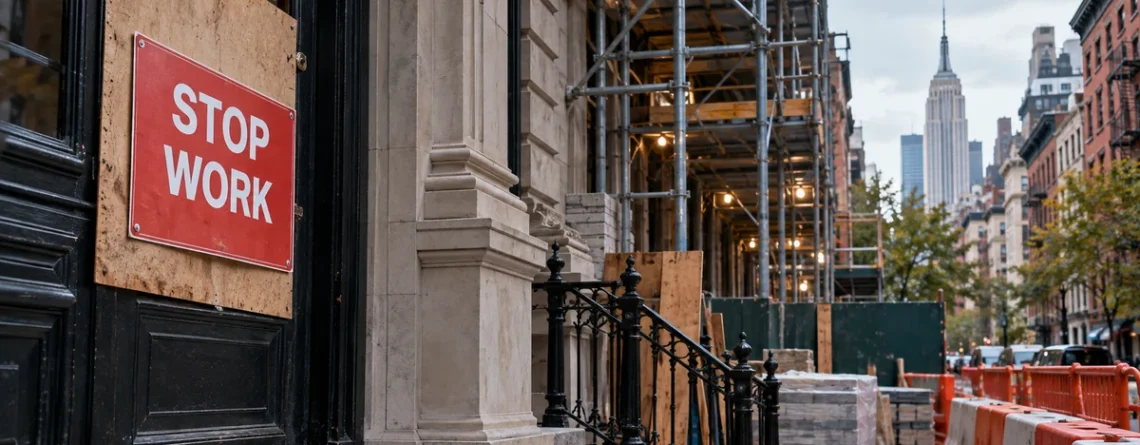
Stop Work Order Removal
Hamoun Niknejad2026-10-21T00:45:26+00:00A Stop Work Order (SWO) is an enforceable direction from DOB, not simply a warning about paperwork. Construction can resume only when the work is legally permitted, and DOB has rescinded the applicable order. Here is a practical way to handle the problem without losing sight of safety, documentation, and cost.Full vs. partial Stop Work OrdersA full SWO generally prohibits all work at the affected site except the remedial activity permitted to make conditions safe. A partial SWO prohibits the...
HPD Violations in NYC: How to Check, Correct and Clear Your Record
Hamoun Niknejad2026-10-12T15:28:49+00:00You fixed the leak, paid the contractor, and put the apartment back together. A few weeks later, the HPD violation is still open. What happened? Repairs and record clearance are separate tasks. To resolve an HPD violation in NYC, you need to address the cited condition, follow the correct certification or dismissal procedure, and confirm the result in the building record. The right procedure depends on the violation, its age, and its current status. This guide helps owners and property managers work...
NYC DOB Post Approval Amendment (PAA): Complete Guide
Hamoun Niknejad2026-10-01T01:54:22+00:00Construction projects in New York City do not always proceed exactly as originally designed. Once demolition begins, an owner may discover existing conditions that were not visible during the initial survey. A contractor may need to relocate equipment, change a plumbing fixture location, revise ductwork, or make another adjustment to the approved construction plans.When those changes occur after the NYC Department of Buildings has already approved the application, the approved DOB record may need to be updated.This is where a...
What Is a Zoning Resolution Determination (ZRD1) in NYC?
Hamoun Niknejad2026-09-18T15:44:23+00:00New York City zoning can become complicated very quickly. A project that looks straightforward on paper may raise questions about permitted use, floor area, building height, setbacks, yards, parking, nonconforming conditions, or the way a particular section of the NYC Zoning Resolution should be applied.In many cases, those questions can be resolved through normal zoning analysis and DOB plan examination. But sometimes the issue is not clear enough to move forward without a formal decision from the New York City...