Sustainable, Green Roof and Solar Panel
The Sustainable Roofing Zone is the portion of a roof that must be used for qualifying sustainable roofing features.
Depending on the building and project, this may include:
- solar photovoltaic panels;
- a vegetated green roof; or
- a combination of solar panels and green roofing.
The requirement generally applies to new buildings, new roofs created through enlargements, and existing buildings where the entire roof deck or roof assembly is being replaced.
However, this does not mean that every square foot of every roof must contain vegetation or solar panels.
Certain areas can be excluded when calculating the Sustainable Roofing Zone. Examples may include required fire-access pathways, mechanical equipment, rooftop structures, parapets, guardrails, certain stormwater-management areas, and other qualifying obstructions or conditions.
This is why the roof should be evaluated before choosing a system or preparing the DOB filing.
For more complicated projects, an early NYC zoning and building-code review can help identify the requirements that may affect the proposed design.
What Is a Green Roof?
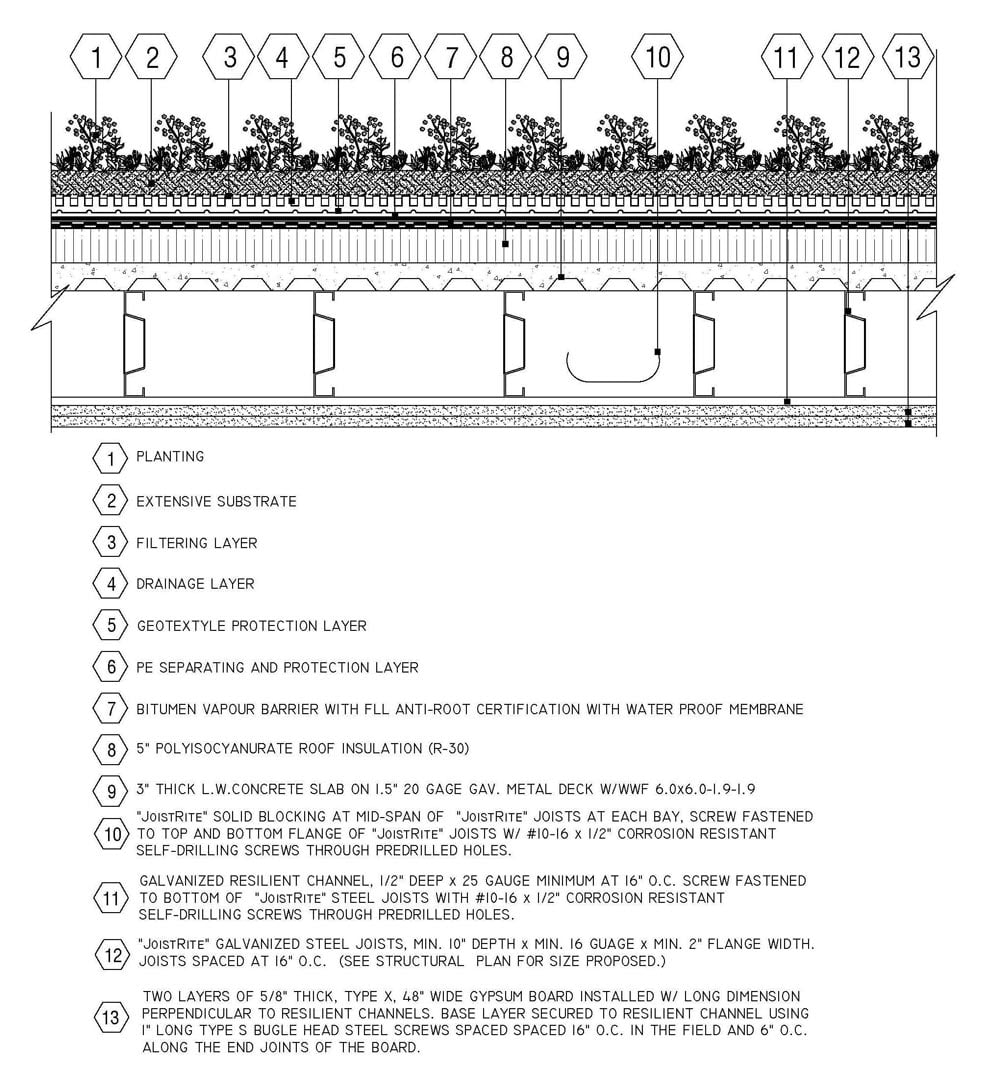
A green roof is a roofing system containing vegetation installed above a waterproof roofing assembly.
A typical system may include vegetation, growing medium, drainage components, root protection, waterproofing, and other layers necessary to protect the building.
Green roofs can provide several benefits. They can retain and slow stormwater runoff, reduce heat absorption at the roof surface, provide additional insulation benefits, and create habitat for plants and insects.
Stormwater management is particularly important in a dense city such as New York. By retaining some rainfall at roof level, green roofs can reduce the amount of water entering the city’s drainage infrastructure during storms.
But installing a green roof is not as simple as placing soil and plants on an existing roof.
Structural Capacity Matters
Green roofs become significantly heavier when the growing medium is saturated with water.
Before installation, the existing structure must therefore be evaluated to determine whether it can safely support the additional load.
DOB notes that even where construction drawings may not be required for certain green roofs with four inches or less of growing medium, an architect or engineer must still perform a structural analysis and certify that the existing roof can support the saturated green-roof condition.
Structural evaluation should therefore happen before an owner commits to a particular green-roof design.
What About Solar Panels?
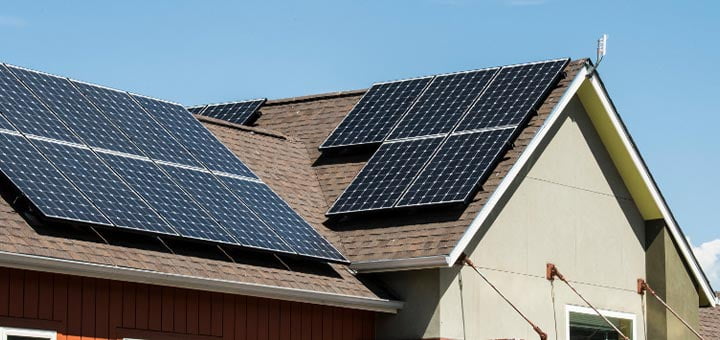
The other major option is a solar photovoltaic, or PV, system.
Solar panels convert sunlight into electricity that can be used by the building. Depending on the size of the system, roof orientation, shading, electrical demand, and other conditions, solar can reduce electricity purchased from the utility and may contribute to a building’s broader energy or emissions strategy.
Solar systems can also be relevant for building owners evaluating strategies related to NYC energy regulations such as Local Law 97. NYC DOB specifically identifies solar installations as one potential tool for reducing building emissions.
Solar design should consider:
- available roof area;
- roof orientation;
- shading from surrounding buildings;
- structural capacity;
- panel layout;
- roof penetrations or mounting systems;
- Fire Code access requirements;
- electrical equipment; and
- existing rooftop mechanical systems.
A Registered Design Professional is required for solar filings, and solar projects also require associated electrical filing by a licensed electrician.
If architectural or DOB documentation is required, HN Republic can assist with Architectural Plans and DOB Filing Coordination.
Do Pitched Roofs Automatically Require Solar Panels?
This is an area where property owners should be careful about using overly simple rules.
A pitched roof does not automatically mean that solar is the only possible answer.
Under current DOB requirements, certain roof areas may be excluded from the Sustainable Roofing Zone when the roof slope exceeds two units vertical in twelve units horizontal—approximately 17 percent—and the qualifying area would accommodate less than 4kW of photovoltaic capacity. Other site conditions can also affect whether an area qualifies or is excluded.
The correct approach is therefore to calculate the applicable roof area and document the specific condition rather than assuming that a particular roof shape automatically creates an exemption or requirement.
What About Landmark Buildings?
Properties that are individually landmarked or located within a New York City historic district can require additional coordination.
Solar panels, rooftop equipment, railings, visible green-roof elements, and other rooftop installations may be subject to review by the Landmarks Preservation Commission (LPC).
Visibility from public streets, building configuration, historic features, and the location of the proposed equipment can all affect the review.
If your building is landmarked, read our guide to NYC Landmark Buildings and LPC approvals before beginning the project.
LPC requirements should be investigated early rather than waiting until the DOB filing is nearly complete.
How Are Green Roof and Solar Projects Filed With DOB?
Since November 2023, NYC solar and green-roof work types are generally filed through DOB NOW: Build. The appropriate filing requirements depend on whether the project is a stand-alone installation or related to a larger New Building, Alteration, or Certificate of Occupancy project.
A project may require architectural or engineering documentation, structural analysis, electrical filings, applicable technical reports, and supporting information showing compliance with the Sustainable Roofing Zone requirements.
HN Republic’s NYC DOB Expediting and Permit Services can assist owners and project teams with DOB NOW filing coordination, documentation, objections, permitting, and project closeout.
Property owners should also avoid starting construction simply because plans have been submitted. DOB filing, approval, permit issuance, construction, inspection, and final sign-off are separate stages. Our guide to common NYC construction permit mistakes explains some of the problems that can delay a project.
Green Roof or Solar Panels: Which Is Better?
There is no single answer that works for every building.
Solar may be attractive when a property has good sunlight exposure and the owner wants to generate electricity. A green roof may make more sense when stormwater management, roof temperature, landscaping, or environmental benefits are priorities.
On some buildings, a combination of green roof and solar panels can be the most practical solution.
The decision should consider the roof structure, available area, surrounding buildings, mechanical equipment, Fire Code access, construction cost, waterproofing condition, energy goals, and applicable DOB requirements.
Final Thoughts
Sustainable roofs are becoming an increasingly important part of construction and building ownership in New York City.
Whether you are constructing a new building, replacing an entire roof, enlarging an existing property, or considering a voluntary solar or green-roof installation, it is worth reviewing the requirements before completing the design.
A relatively simple rooftop project can involve structural, architectural, electrical, Fire Code, zoning, DOB, and sometimes LPC considerations.
If you need assistance reviewing a sustainable roof, green roof, or solar-panel project, HN REPUBLIC can help evaluate the project requirements and coordinate the appropriate architectural and DOB filing process.
Contact HN REPUBLIC to discuss your property and proposed project.
Educational Notice
This article is provided for general educational and informational purposes only. It is not intended to replace a project-specific review by a Registered Architect, Professional Engineer, licensed contractor, attorney, or applicable government agency. NYC Building Code, Energy Code, Zoning Resolution, Fire Code, DOB procedures, Local Laws, agency interpretations, tax-incentive programs, and other requirements are subject to amendment and change. Always verify the current requirements applicable to your specific building and project before beginning design or construction.