What is an SRO Building
If you are buying, selling, renovating, or converting an older New York City property, you may come across the term SRO, or Single Room Occupancy. In NYC, however, an SRO is more than simply a building with small bedrooms.
Under New York’s Multiple Dwelling Law, single room occupancy generally describes a condition where one or two people occupy a single room—or connected rooms—separately and independently from other occupants within the same apartment or multiple dwelling. Residents may have a private sleeping room while sharing certain facilities, such as a bathroom or kitchen.
For owners and buyers, SRO status can affect legal occupancy, renovation plans, DOB filings, Certificate of Occupancy changes, fire and life-safety requirements, and whether a Certification of No Harassment is required before certain work can proceed.
Is an SRO a Building Type or a Type of Occupancy?
Technically, single room occupancy describes a type of occupancy. A building may be used entirely as an SRO, or only part of a multiple dwelling may contain SRO or rooming-unit conditions.
Older NYC properties often have complicated occupancy histories. A townhouse may contain full apartments today but still have historical records showing furnished rooms or rooming units.
Before making decisions, compare the existing condition with DOB and HPD records, including the Certificate of Occupancy, historical applications, permits, and occupancy documents.
For more information, see our guide to NYC Certificate of Occupancy and TCO.
What Does a Typical SRO Building Look Like?
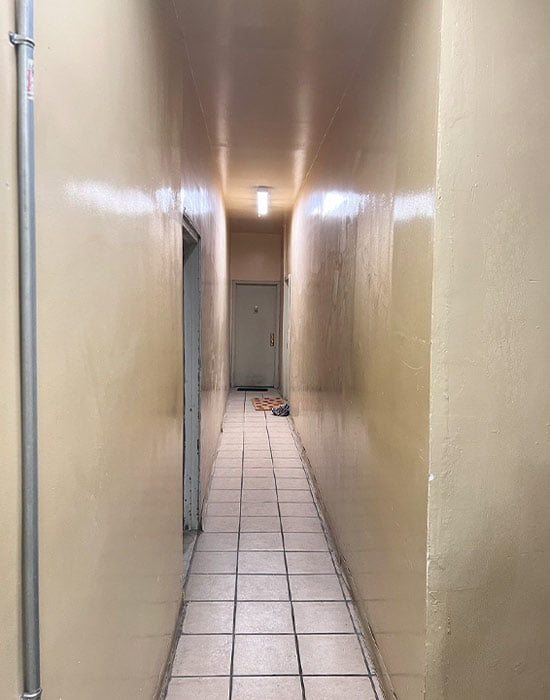
There is no single layout for every SRO building. Historically, many SRO properties contained private sleeping rooms along a corridor or separately occupied rooms within a larger residential layout. Bathrooms, kitchens, or other facilities could be shared.
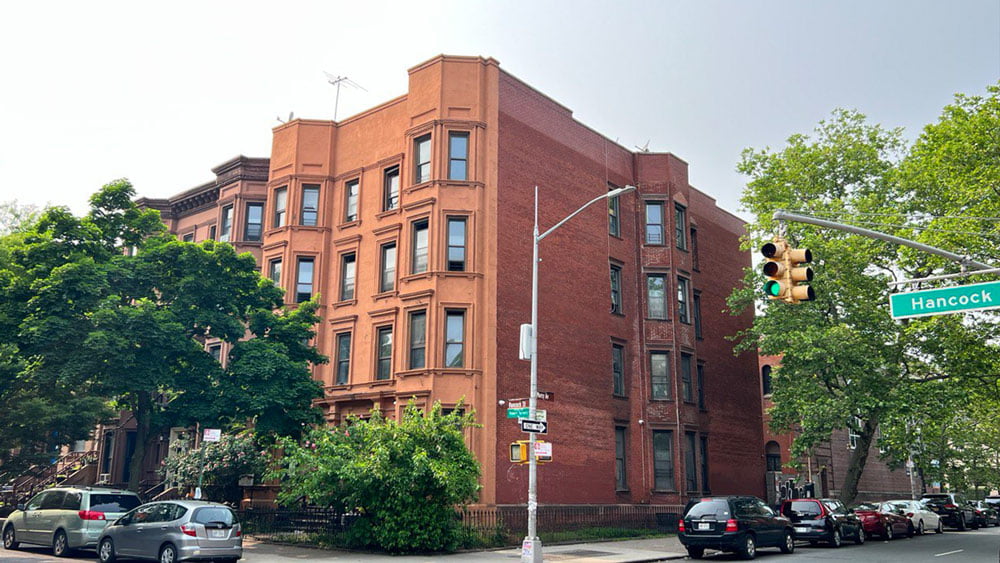
Older brownstones and townhouses were sometimes converted to rooming-house or furnished-room arrangements, so the present layout may differ greatly from the historic legal occupancy.
A renovated interior, new kitchen, or apartment-style layout does not prove that the legal occupancy was changed. Room size, light and air, egress, bathrooms, cooking facilities, fire protection, and other safety conditions may also matter.
Related reading: Minimum Room Size in NYC and NYC Occupancy Groups.
Why SRO Status Matters When Buying a Building
SRO issues often become important during real-estate due diligence.
Imagine you are considering a townhouse that is currently arranged as several apartments. The seller may market it as a multifamily property, but historical records may indicate prior SRO use. If you plan to renovate, reduce the number of units, create larger apartments, or convert the building to one- or two-family use, that history can affect the project strategy.
Before purchasing, review questions such as:
- What is the building’s legal use and occupancy?
- Does the current layout match the Certificate of Occupancy or other lawful records?
- Are SRO or rooming units shown in historical DOB or HPD records?
- Are there open applications or violations?
- Will the project require a new or amended Certificate of Occupancy?
- Is a Certification of No Harassment required?
- Can the proposed conversion satisfy zoning, egress, fire-safety, and accessibility requirements?
HN Republic’s NYC zoning and building-code consulting service can help review legal use, occupancy, zoning, building records, and filing constraints.
Can You Convert an SRO Building to Apartments?
Potentially, but an SRO conversion in NYC should not be treated as a simple interior renovation.
An owner may want to convert an SRO into Class A apartments, combine rooms into larger dwelling units, reduce the number of residential units, or convert a smaller property to one- or two-family use. Depending on the existing legal occupancy and proposed condition, the project may require a DOB alteration filing and a new or amended Certificate of Occupancy.
The design team must determine which current requirements are triggered. Issues can include egress, fire-rated construction, fire protection, light and ventilation, room dimensions, plumbing, accessibility, and energy-code requirements. Zoning must also confirm the proposed use and density.
For occupancy-change projects, see our Certificate of Occupancy guide and architectural plans and DOB filing coordination services.
What Is a Certification of No Harassment for an SRO?
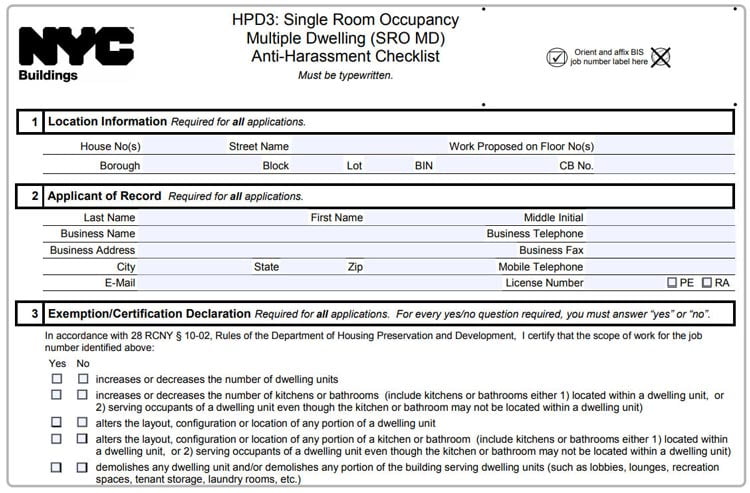
One of the most important issues involving SRO properties is the Certification of No Harassment, commonly called a CONH.
NYC Housing Preservation and Development requires owners of covered SRO multiple dwellings to obtain a CONH before DOB permits can be issued for certain types of work. Depending on the project, covered work can include changes in use or occupancy, changes to dwelling-unit layouts, adding or removing kitchens or bathrooms, changing the number of dwelling units, demolition, and applications for a new or amended Certificate of Occupancy.
The program is intended to prevent owners from benefiting from tenant harassment used to empty a building before redevelopment. A CONH is not simply a statement from the current owner; HPD can notify tenants and other parties, collect comments, and investigate the property’s history. Because this can affect project timing, investigate it early.
Can You Create New SRO Units in NYC?
Owners should be especially careful here. Traditional SRO and rooming-unit uses are highly regulated, and the NYC Housing Maintenance Code has long restricted the creation of new rooming units except under specific circumstances.
Dividing an apartment into separately rented bedrooms does not automatically create a legal SRO. Installing locks on bedroom doors or adding shared facilities does not establish lawful occupancy either.
The correct analysis depends on the building’s lawful history, existing records, proposed use, and applicable regulations. If the current condition does not match the legal occupancy, the solution may involve legalization, discontinuing an unlawful condition, or developing a different design strategy.
What Should You Review Before Renovating an SRO?
For an SRO property, start with a coordinated zoning, building-code, and record review before investing heavily in design.
The review should examine the zoning district, Certificate of Occupancy, DOB and HPD history, existing plans, open applications and violations, proposed number of dwelling units, and potential CONH requirements.
Zoning regulates matters such as use, density, floor area, yards, and building bulk. Building-code requirements address construction, occupancy classification, egress, fire safety, accessibility, and other technical issues.
For more background, see our guides to NYC Zoning and ADA Accessibility.
Once the project strategy is clear, HN Republic can also assist with NYC DOB expediting and permit services.
Final Thoughts
SRO buildings are an important part of New York City’s housing history, but they can create complicated legal and technical questions for owners, buyers, developers, and real-estate professionals.
The biggest mistake is assuming that the building’s current appearance tells you its legal status. A renovated townhouse may still have an SRO history, and a property marketed as a multifamily building may have occupancy records that require further investigation.
Before purchasing, renovating, legalizing, or converting an SRO property, review the records and understand the regulatory path first.
If you need help with an SRO building in New York City, HN Republic can provide a full zoning and building-code analysis for your property. We can review available DOB and occupancy records, identify potential SRO and Certificate of Occupancy issues, and help establish a practical path for the next filing steps.
Contact HN Republic to discuss your property and proposed project.
Note: This article is for general educational purposes. SRO status and conversion requirements depend on the specific building, occupancy history, proposed work, and agency determinations.